


New post
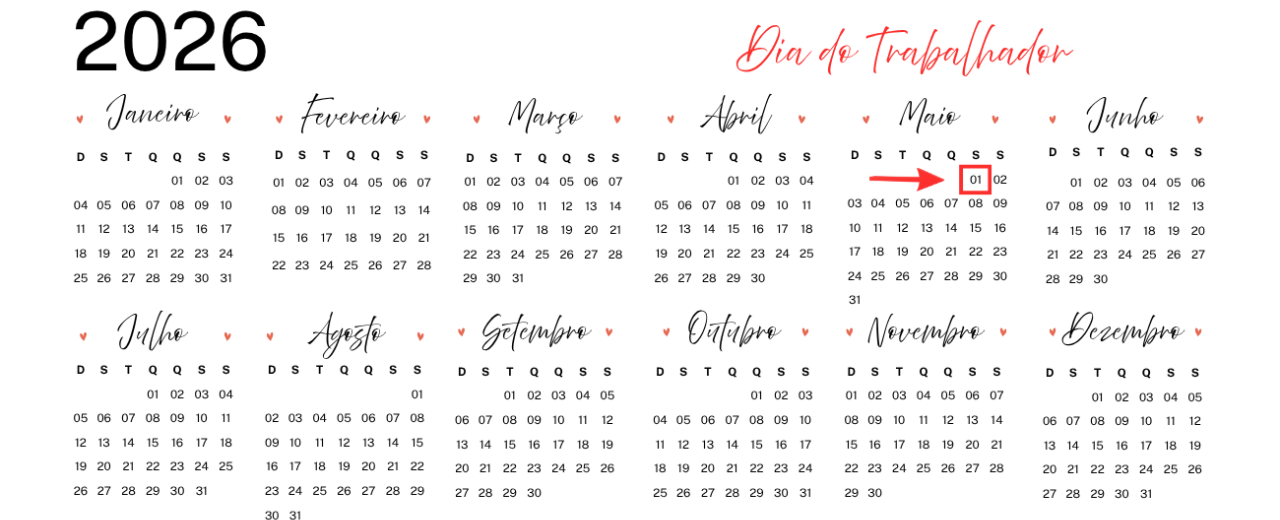
The first of May is, for many, synonymous with a holiday, rest, and perhaps a family outing. But behind this day off on the calendar lies one of the deepest and, at times, most forgotten stories of our modern society. It is the story of sweat, of struggle, and, above all, of the conquest of time.
At Lusijoia, we work daily with precious metals that span generations. But the most precious of all goods is not kept in a velvet box: it is time. Time to be with those we love, time to rest, time to live. This 1st of May, Workers' Day, we propose a journey through the history of this date, understanding how the conquests of the past echo in the struggles of the present and how all of us, directly or indirectly, are heirs to those who, over a century ago, dared to ask for eight hours of work, eight of rest, and eight for family.
1st of May in Portugal and the World
This date spread across Europe, becoming the annual meeting point for the working class. In Portugal, the first decades of the 20th century were marked by strong social unrest. Rural workers from Alentejo and factory workers from the emerging industries of Porto and Lisbon found in the 1st of May a moment of unity and affirmation of their strength. During the Estado Novo (1926-1974), António de Oliveira Salazar's dictatorship tried to distort the meaning of the date. It banned demonstrations and tried to turn the 1st of May into a "Labour Day Celebration", promoting regime-controlled parades and official speeches that appealed to harmony between employers and employees, hiding real exploitation. However, the spirit of struggle never completely died. In the harshest years of repression, many resisters continued to mark the date in secret. With the Carnation Revolution on April 25, 1974, the 1st of May finally regained its full meaning. The following year, in 1975, the largest ever 1st of May demonstrations took place in Portugal, in an atmosphere of celebration of newly won freedom and demands for agrarian and labour reforms.
Today, in several European countries, including Portugal (where it is a national holiday), the 1st of May continues to be marked by demonstrations called by trade unions (CGTP and UGT), which recall the historic struggle and present the current demands of the working class.
In 1889, during the international congress held in Paris, the date of 1st May was established as International Workers' Day, in memory of the events in Chicago and as a symbol of resistance and universal demand for labour rights.
The Chicago Revolt: The birth of a date
To understand what we celebrate (and should reflect on) on May 1st, we must go back to the end of the 19th century, to the United States of America. In the city of Chicago, the scene was one of rapid industrial growth, but also of brutal human exploitation. Factories operated without any regulation, and workers, including women and children, were subjected to working days that reached up to 16 or 17 hours daily, six days a week. In 1886, the American labour movement was already organizing strikes and protests. The main banner was simple and fair: the implementation of the eight-hour workday. The idea, which seemed revolutionary at the time, proposed dividing the day into three equal parts: eight hours for work, eight for rest, and eight for leisure and family life. It was in this context that a major general strike was called for May 1, 1886. About 340,000 workers brought the country to a standstill. In Chicago, the epicentre of the movement, clashes became violent. On May 3rd, at the McCormick Harvesting Machine Company factory, police opened fire on demonstrators, killing several workers. The following day, May 4th, at Haymarket Square, a protest against police violence ended in tragedy: a bomb was thrown at security forces, resulting in the deaths of police officers and civilians. The government took advantage of the chaos to arrest and summarily try anarchist and union leaders. Without concrete evidence, eight men were convicted, and four of them were hanged. These workers became known as the Chicago Martyrs.
The repression was violent, but it failed to extinguish the flame of struggle.
The Great Conquests: Labour Laws and the 1988 Constitution
If 1886 was the cry, the 20th century was the response. The workers' struggle, symbolized by the 1st of May, resulted in fundamental achievements that we now take for granted, but which were paid for with much blood and sweat. In Brazil, although our focus as a Portuguese company is on the European context, it is impossible to ignore the date's universal impact. However, looking at the global and European context, the victories were enormous. In Portugal, the 1974 revolution brought new impetus to workers' rights, but throughout the 20th century, the following were won:
- The 8-hour day and 48-hour week: The historic struggle was finally victorious, legalizing a maximum limit for the exploitation of labour.
- Paid Weekly Rest: The right to have a day (or two) for family and leisure, without loss of pay.
- Paid Holidays: Recognition that workers need an extended period of rest to recover their energy.
- Social Security and the Right to Unionize: The creation of worker protection systems (unemployment benefits, sick leave) and the right to organize collectively to negotiate better conditions.
These achievements, which seem "normal" to most of us, were the main slogan of May 1st demonstrations for decades. They were the culmination of a dream that began with the demand for the "8-8-8 division".
The Current Struggle: Reducing Working Hours and Ending the 6×1 Shift
If we look at the news this 1st of May 2026, we realize that, despite progress, the struggle is far from over. Working conditions have been transformed, new forms of exploitation have emerged (such as digital app-based work or "PJ-ization" – hiring workers as legal entities to avoid labour charges), and job insecurity has increased.
Today, the main banner of workers in many countries is the reduction of working hours. The "6×1" work schedule, where one works six days to rest only one, has been the target of harsh criticism. Recent data indicates that about a third of workers are still subject to this exhausting regime. Brazil's Minister of Labour and Employment, Luiz Marinho, in an article published this May 1st, synthesized this struggle with a phrase worth reflecting on: "Working cannot mean giving up life".
Why is this struggle so current?
- Mental and Physical Health: Long hours and information overload (so-called "burnout") are generating an alarming increase in psychosocial illnesses. Today's worker wears down not only physically, but above all mentally.
- Productivity vs. Time: Studies show that more rested workers are more productive and make fewer mistakes. Productivity has increased exponentially with technology, but this gain has not translated into less working time for human beings.
- The Right to Life Time: Society has realized that work should be a means to live well, not an end in itself. New generations increasingly value the balance between professional and personal life.
Trade unions, gathered this 1st of May 2026, have been unanimous: reducing the working week to 40, 36 or 35 hours (without pay cuts) and ending the modern slavery of the "6×1 shift" are the top priorities. Union leaders state that "upon completing 140 years, May 1st reaffirms its original meaning: the struggle for life time". Labour law professor Ricardo Calcini summarizes this trend as "an irreversible movement", where the human being is increasingly placed at the centre of the labour relationship.

The Philosophy of Work: "Live to Work" or "Work to Live"?
The great philosophical question that runs through the entire debate about May 1st is this: what is the place of work in our lives?
There was a time when work was seen as a martyrdom, a means of survival. Later, with industrialization, it became a necessary "burden" for sustenance. Today, Western society is moving towards a new perspective: work as an important pillar, but not the only one, of existence.
As Minister Luiz Marinho aptly expressed, the culture of "living to work" is outdated. This does not mean devaluing well-done work, craftsmanship, dedication, or entrepreneurship. It means, rather, fighting against the excess that steals what is most precious to us: health and relationships.
"PJ-ization" (forcing a worker to open a company to provide services, losing all labour rights) and informality are the great ghosts of this century. Many workers, in the so-called "gig economy", face 10, 12 or more hour shifts, without access to holidays, sick pay or social security. They are reliving the abuses of the 19th century.
Lusijoia's Perspective: The Value of Work and the Artisan
In this context, Lusijoia operates in a very particular sector: goldsmithing. Our daily work deals with two seemingly opposite concepts, but which blend perfectly:
- Tradition and manual work: Filigree, hallmarking, and the crafting of jewellery demand hours of meticulous work, attention to detail, and often the application of ancestral techniques.
Technology and modernity: Large-scale jewellery production, online commerce, and logistics require efficiency and meeting deadlines.
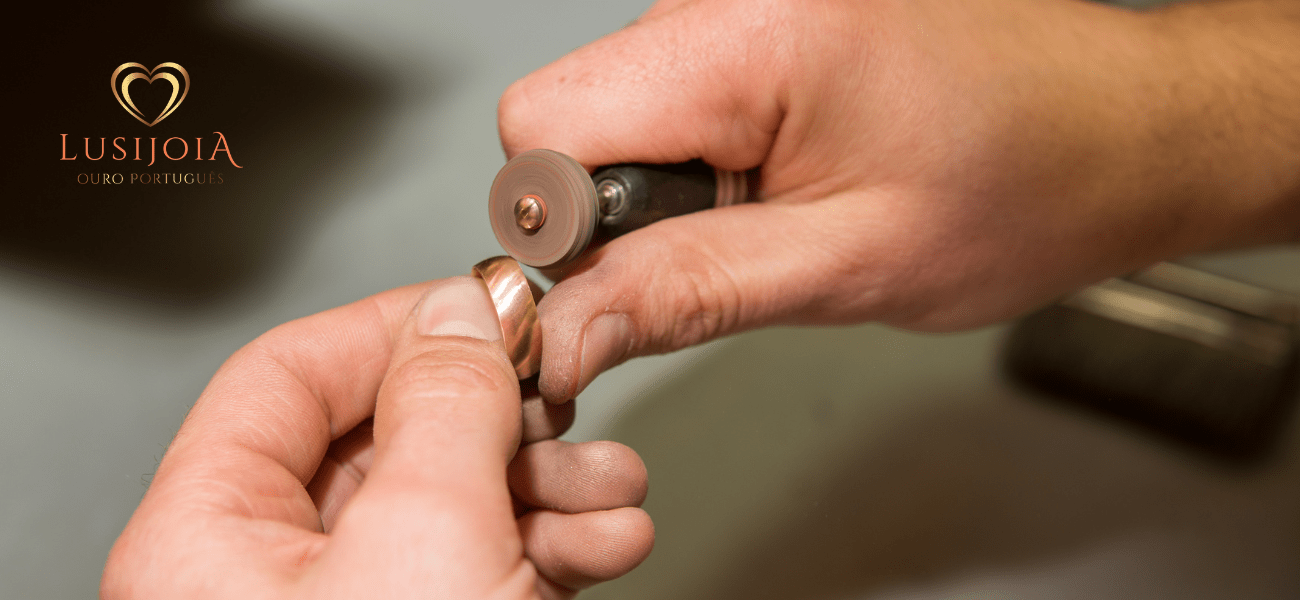
We believe that good work deserves to be fairly rewarded. Our pieces, certified by INCM (Imprensa Nacional-Casa da Moeda), guarantee the purity of the metal to the customer. Likewise, we defend that the worker (be they a goldsmith, jeweller, logistics operator, or designer) should have their work valued, with dignified conditions and time to live. The jewellery we sell at Lusijoia is often bought to celebrate life's moments: weddings (rings), births (charms), achievements. What would be the point of these celebrations if the buyer or the goldsmith who made them had no time to live them?
Conclusion: What do we celebrate on May 1st?
We celebrate memory. We remember the Chicago martyrs, the textile factory workers who died of exhaustion, the anarchists hanged without proof, and the resisters who, under dictatorship, could not take to the streets.
We celebrate the achievements. The right to 8 hours, paid holidays, unemployment benefits, and the possibility to collectively demand.
We celebrate the current struggle. The awareness that the path is still long. The demand for an end to the 6×1 shift, for reducing the working week to 35 or 40 hours, for an end to precariousness and "PJ-ization", and for equal rights for all, both inside and outside digital platforms.
But, above all, we celebrate life. The simple and profound right to, after fulfilling our duty, be able to close the factory or office door and go home. To hug our children, walk the dog, read a book, or simply do nothing. That "doing nothing" is the greatest luxury that the workers' struggle has brought us.
This May 1st, when you look at the clock, remember: those hours of rest were not "given" to you. They were won. They were wrested from economic power by the unity of the working class. As several analysts have written, they were wrested, not granted.
Lusijoia wishes all its customers, collaborators, and friends a blessed and just Workers' Day. May the precious metal of your time always be spent on what truly matters: family, health, and happiness.
Because, in the end, the best thing we can buy with our money is time to live.
-----------------------------------------------------------------------------------------------------
Follow our Blog to discover more publications related to the world of jewelry first-hand!
Subscribe to our Newsletter to receive news from us in your email every two weeks.
Explore our website to appreciate jewelry in Portuguese gold, sustainable gold, silver and filigree pieces, included in the most current trends in the sector.
Follow our Social Media to get more inspiration when composing your everyday looks.
Related posts

The Importance of Choosing the Right Lenses for Sunglasses, Along with Jewelry

The Art of Ear Cuffs: Earrings without piercing to change your look

Total Eclipse in Portugal: How to Photograph the Phenomenon That Will Only Return in 2144

The Euro is getting a makeover: Do you prefer historical figures or birds?

FIA Lisboa 2026: Where traditional craftsmanship meets a contemporary perspective

Emmy Awards 2026: The nominees that will be making headlines

Jewelry with a Story: The allure of vintage and "second-hand" or second-life pieces

Wedding anniversaries: the symbolism behind each year (and the perfect piece of jewelry to...

Lusijoia rebranding and the art of storytelling (with a new look)