


The Importance of Choosing the Right Lenses for Sunglasses, Along with Jewelry
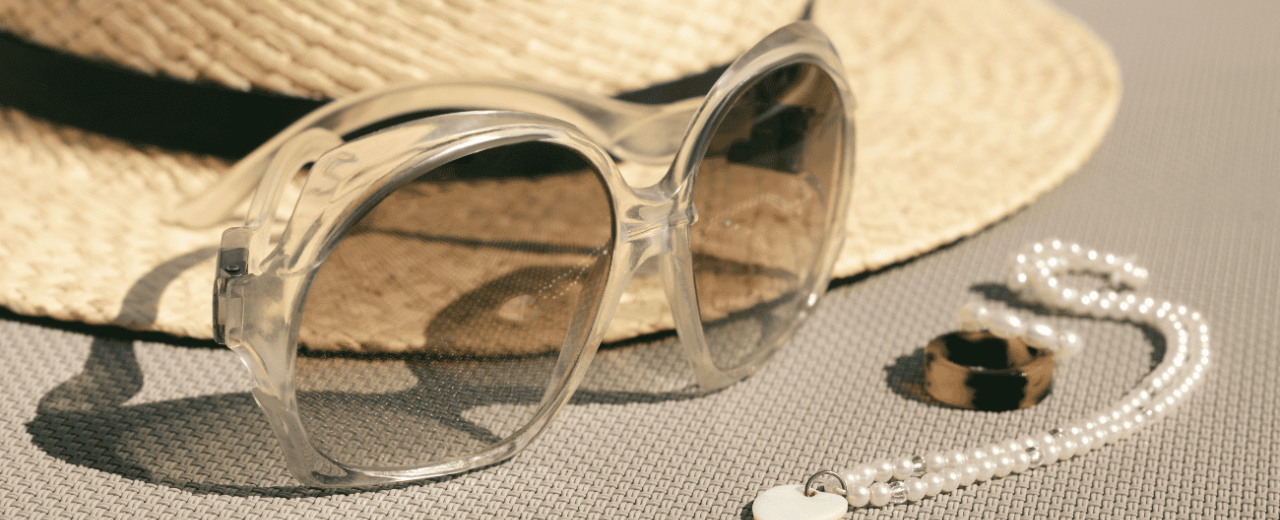
Nowadays, practically all of us protect our skin from the sun, right? So why do we keep forgetting our eyes?
We all know we should wear sunscreen. We religiously apply factor 50 at the beach, at the pool, and even on the cloudiest days. We worry about skin damage, premature ageing, and the risk of cancer. And we're right to do so, of course!
But there is one part of the body that continues to receive much less attention than it deserves: our eyes.
And the truth is that ultraviolet radiation can cause as much damage to vision as to the skin – if not more. The difference? Skin regenerates. Eyes don't. Cataracts, macular degeneration, and other eye diseases are often the result of a lifetime of sun exposure without adequate protection.
In this article, we're going to talk about why choosing the right lenses for your glasses is a health decision, not just a style one. Of course, at Lusijoia we love style. But we are aware of the importance of health at all levels. So here we will demystify myths, explain what "UV protection" really means, and also give you tips on how not to be fooled when buying your next pair of glasses.
What's at stake? (more than you imagine)
When we talk about sun protection, we usually think of UV rays. And the eyes are particularly vulnerable to them.
There are three types of ultraviolet radiation: UVA, UVB, and UVC. UVC rays are absorbed by the ozone layer and don't reach us. UVA and UVB, however, directly impact our health. Prolonged unprotected exposure to these rays can cause serious problems, such as:
- Cataracts: UV radiation damages the lens, making it opaque and impairing vision.
- Macular degeneration: affects the central area of the retina, responsible for detailed vision, and is one of the leading causes of vision loss in the elderly.
- Photokeratitis: a "sunburn" on the cornea – that gritty feeling in your eyes after a full day on the snow or at the beach without glasses.
- Pinguecula and Pterygium: abnormal growths on the surface of the eye, often associated with sun exposure.
- Eye cancer: yes, UV rays can also cause tumours on the skin of the eyelids and conjunctiva.
And the scariest part? Many of these damages are cumulative and irreversible. There's no "cure" for degenerative cataracts. There is surgery, of course, but prevention is always the best option, don't you agree?
The big trap: dark glasses that don't protect (and can even make things worse)
Here's one of the biggest myths in the eyewear world: "If the lens is dark, it protects".
Wrong!
The colour of the lens does not guarantee UV protection. What really protects is the presence of a filter against ultraviolet radiation incorporated into the lens.
Even more serious: dark glasses without UV protection can be more dangerous than wearing no glasses at all. Why? Because the dark lens reduces visible light, causing the pupils to dilate. If the lens doesn't have a UV filter, this dilation allows more UV radiation to enter the eyes than if you weren't wearing glasses. It's like giving radiation a discount to enter in full force. Isn't that ironic?
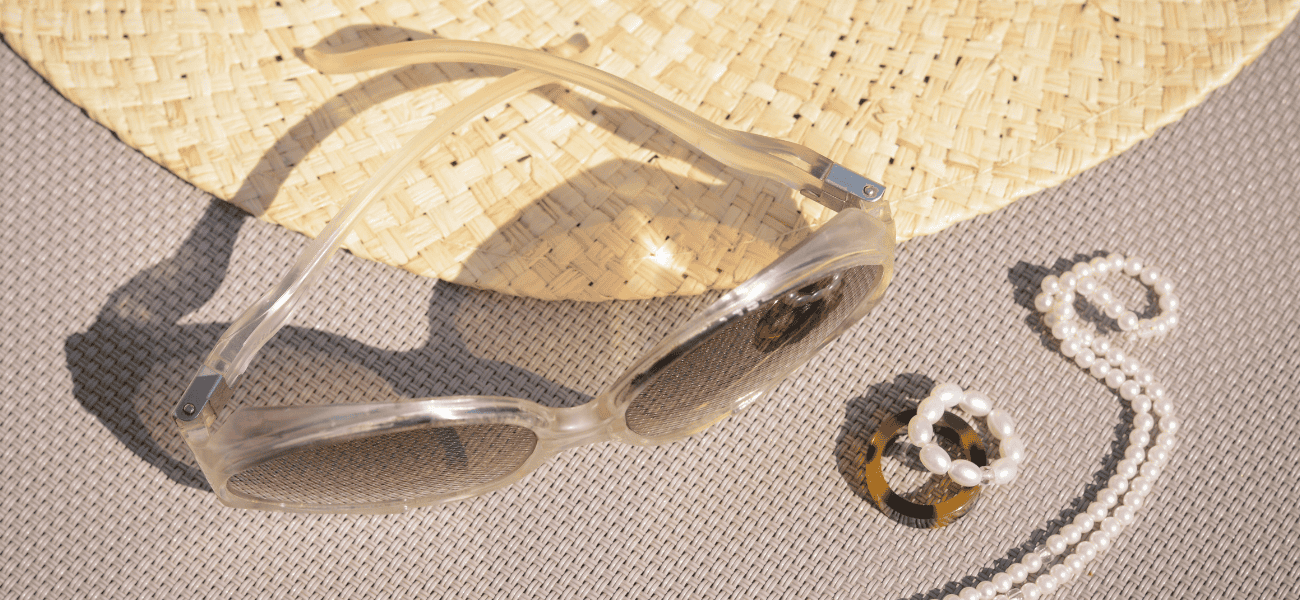
What to look for in the right lenses (and how not to be fooled)
1. The label is your friend
When buying glasses, the first thing to do is read the label. Look for:
- "100% UVA and UVB protection";
- "UV400" – this means the lens blocks all UV rays with wavelengths up to 400 nanometres, covering both UVA and UVB.
- Certifications such as CE (for imported products) or national quality seals.
If the seller can't inform you or gives vague answers, be suspicious.
2. Size matters (and curvature too)
Sunglasses with large, curved lenses offer more comprehensive protection. They cover not just the front but also the sides, preventing light from entering through the edges.
3. Polarised lenses: extra protection, but not the same thing
Polarised lenses reduce glare and reflections (on water, snow, asphalt), providing greater visual comfort. But polarisation is not synonymous with UV protection. A lens can be polarised and not have a UV filter. So always check both attributes.
4. Prescription glasses also need protection
Even those who wear prescription glasses should protect their eyes from the sun. Clear lenses can also incorporate a UV filter – and most quality brands already do this. Ask your optometrist.
And children? Should they also wear glasses?
Yes, and perhaps even more than adults. Children are more vulnerable to UV rays because their pupils are larger and their eye lenses are more transparent. It's estimated that a child can be exposed to about 80% of their lifetime UV radiation before the age of 20.
So, if you take your children to the beach or the pool, don't forget UV-protective sunglasses for them too.
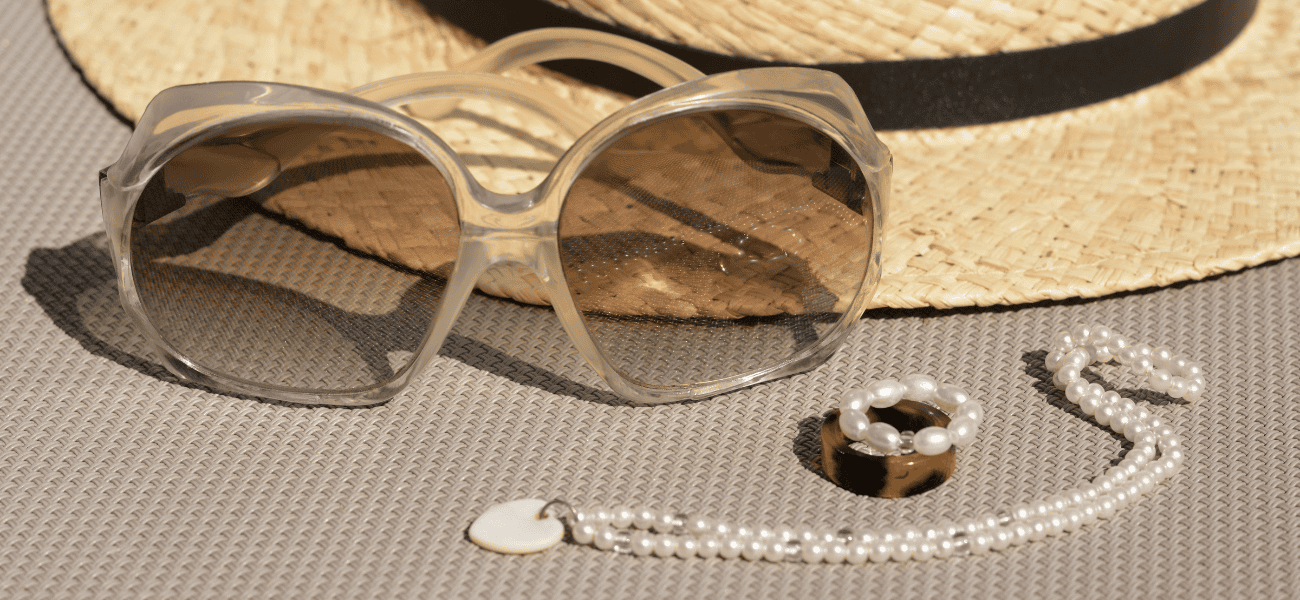
How to combine your jewellery with your glasses style
You've already chosen the perfect sunglasses – with 100% UV protection, polarised lenses, and a Hollywood celebrity look. Great. But now, the question arises: what about the jewellery? How are my favourite pieces going to work with the frames that have just entered my life?
The truth is that glasses are, today, more than a health accessory. They are an extension of our personality, a style piece that communicates who we are. And, like any good style piece, they deserve to be paired with the right jewellery.
The golden rule: balance is everything
Before we dive into specific combinations, there's one principle worth remembering: glasses are often the bulkiest and most visible piece in our look. They sit at the centre of the face, frame the eyes, and are the first thing others see when they look at us.
So, the golden rule is: balance, don't compete.
If the glasses are large, bold, with strong colours or thick frames, the jewellery should be more discreet. If the glasses are thin, light, and almost invisible, the jewellery can take on a more leading role.
Think of the glasses as the "lead actor" and the jewellery as the "supporting cast". Both are important, but one shouldn't steal the spotlight from the other.
And an extra tip: ears on display
If you really want your jewellery to shine, wear your glasses with your hair tied back (or with your ears exposed). This way, the earrings – whether small or bold – become visible and create a harmonious visual line with the frames.
Glasses are often the first thing others see. They are the "business card" of our face. Jewellery, on the other hand, is our personal signature – the detail that says "this is me".
Combining them isn't an exact science. It's a matter of trying, looking in the mirror, and feeling if the combination works. But with these tips, we're sure you'll find the perfect balance between protection, style, and personality.
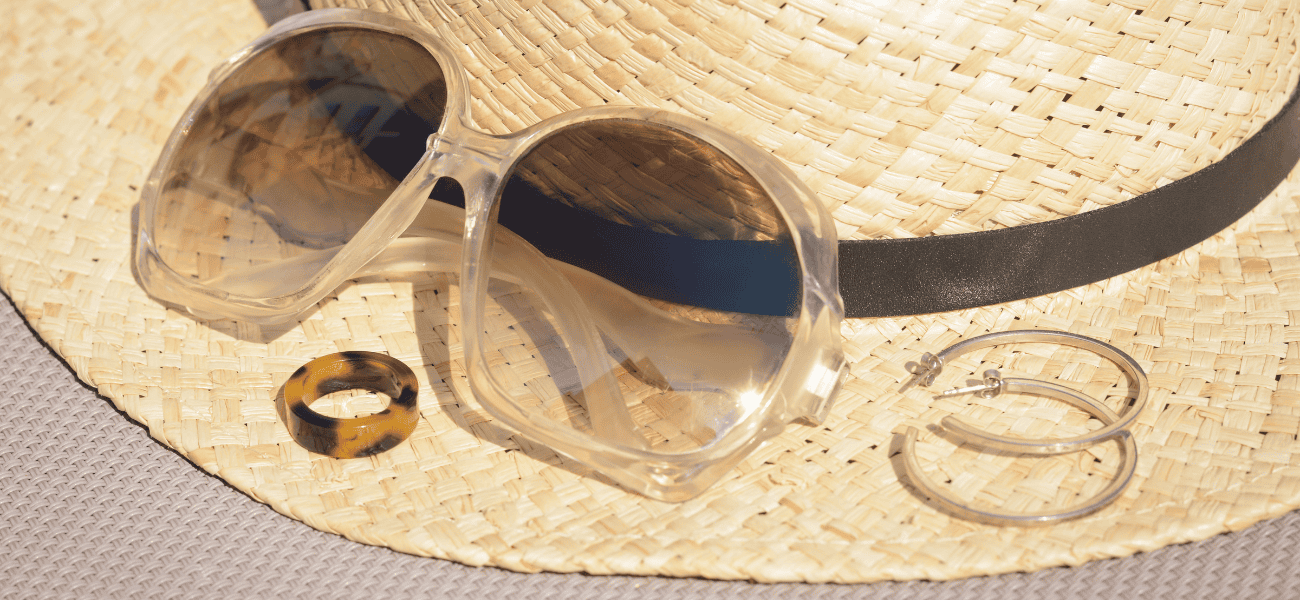
Conclusion: protecting your eyes is like wearing sunscreen (but for your vision)
The analogy is simple: just as you wouldn't leave home without sunscreen on sunny days, you also shouldn't leave without UV-protective glasses. Solar radiation is invisible, but the damage it causes is real. And unlike skin, eyes don't have the ability to regenerate. Every day of exposure counts.
So, choosing the right lenses isn't a matter of fashion or budget. It's a decision about eye health.
And the good news? Sunglasses with 100% UV protection aren't necessarily expensive. You just need to know what to look for!
" And you, do you usually check if your glasses have UV protection when you buy them? Or do you think you might have already been fooled by a dark lens that didn't protect anything at all? Tell us in the comments – and by the way, if you need more recommendations, we're always here to help."
-----------------------------------------------------------------------------------------------------
Follow our Blog to be the first to know about more publications related to the world of jewellery!
Subscribe to our Newsletter to receive, every two weeks, news from us in your email.
Explore our Site to appreciate jewellery in Portuguese gold, sustainable gold, silver, filigree, and stainless steel pieces, included in the most current trends in the sector.
Follow our Social Media for more inspiration when putting together your everyday looks.
Related posts

The Art of Ear Cuffs: Earrings without piercing to change your look

Total Eclipse in Portugal: How to Photograph the Phenomenon That Will Only Return in 2144

The Euro is getting a makeover: Do you prefer historical figures or birds?

FIA Lisboa 2026: Where traditional craftsmanship meets a contemporary perspective

Emmy Awards 2026: The nominees that will be making headlines
Jewelry with a Story: The allure of vintage and "second-hand" or second-life pieces
Wedding anniversaries: the symbolism behind each year (and the perfect piece of jewelry to...

Lusijoia rebranding and the art of storytelling (with a new look)

Diamonds: No, thank you! What the industry doesn't want you to know (and we'll tell you)