

Viana do Castelo Festivities 2025: Mordomas Show the Gold
Viana do Castelo Festivities in 2025: Tradition, Colors, and Emotions by the Sea
August is the month when Viana do Castelo transforms into a living stage of faith, culture, and celebration. In 2025, the main festivities include the Pilgrimage of Our Lady of Agony (August 12–20). The Pilgrimage of Agony is undoubtedly the largest and most emblematic popular festival in the country. It honors the patron saint of fishermen, Our Lady of Agony, with roots dating back to the 18th century. Throughout these days, the city is invaded by a maritime and land procession, with decorated boats and floats that traverse the historic center.
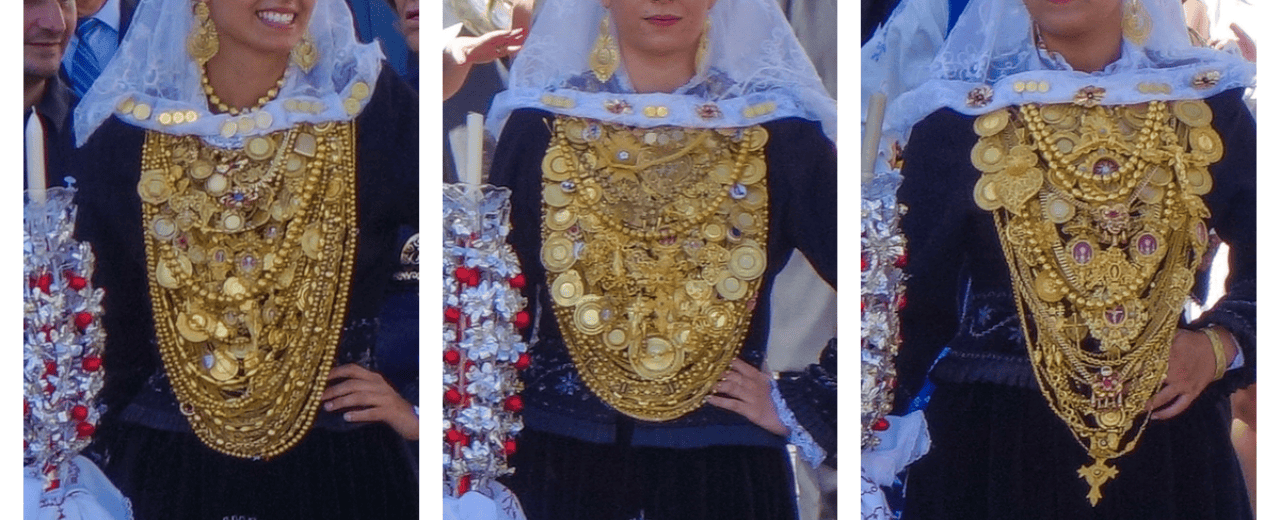
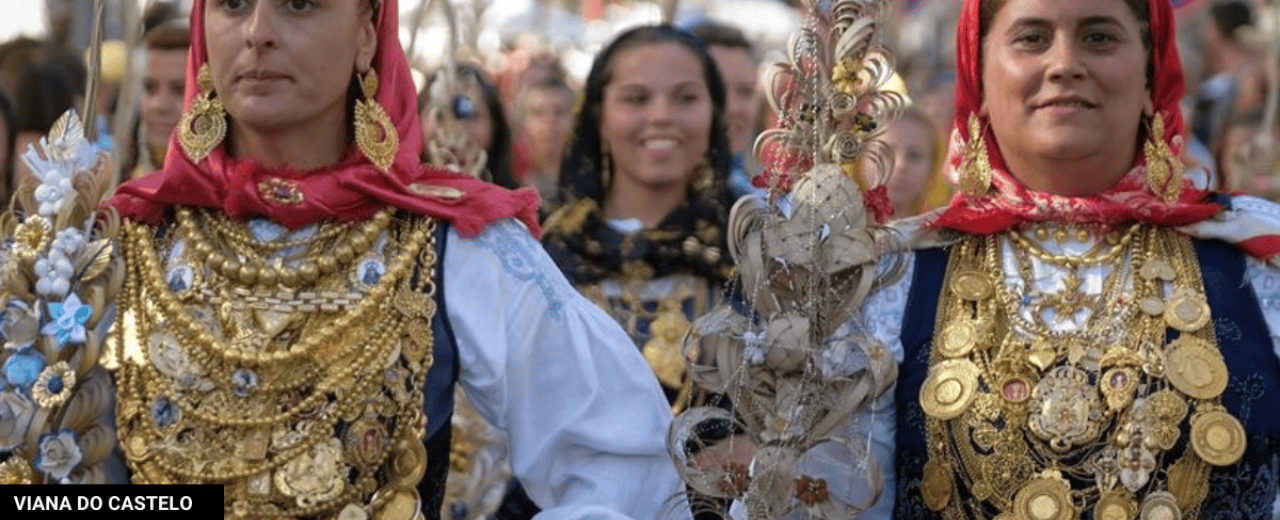
The Mordomia Parade, where mordomas parade in dazzling regional costumes, enriched with gold filigree. The historical and ethnographic procession, filled with giants, big heads, and folk groups celebrating Minho culture, is held at the Viana do Castelo City Council. The Craft Fair and Folklore Festival, where music and local traditions come to life in the streets, is also celebrated.
This pilgrimage is also marked by the strong presence of the Viana diaspora, who return from around the world to celebrate the city and its traditions.
Pilgrimage of Agony
The 2025 Pilgrimage of Agony in Viana do Castelo will take place from August 12th to 20th, with the traditional Mordomia Parade scheduled for Thursday, August 14th, at 4:00 pm.
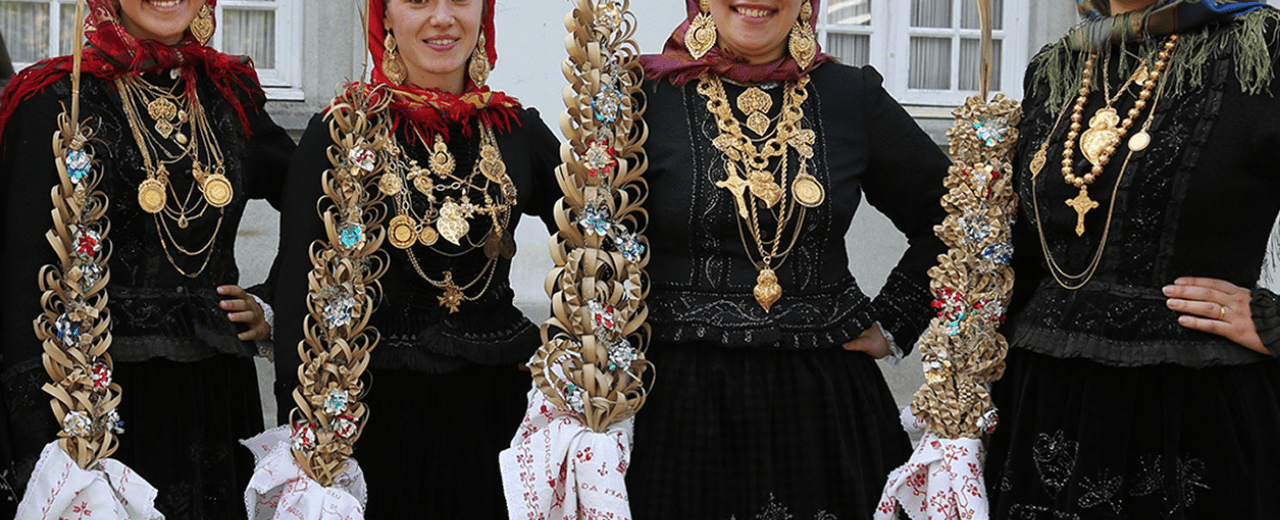
This parade is one of the most emblematic moments of the pilgrimage, bringing together hundreds of women dressed in formal attire, displaying the traditional costumes of the various parishes of Viana do Castelo and displaying gold pieces that, in many cases, are family heirlooms. The event is recognized as the largest outdoor gold showcase in the world, reflecting the cultural richness and "chiada" of Viana do Castelo women.
The previous year, the Mordomia Parade featured the participation of one thousand women from 12 districts of Portugal and ten countries, including France, the United States of America, Switzerland, Andorra, Luxembourg, Mexico, Brazil, Canada, and the Netherlands. The youngest participant was 14, and the oldest was 84, demonstrating the intergenerational impact of this event. The Romaria d'Agonia is a celebration that attracts thousands of visitors every year, offering a diverse program that includes, in addition to the Mordomia Parade, the Historical/Ethnographic Parade on Saturday, August 16th, and the traditional Procession to the Sea, which will take place on Wednesday, August 20th, starting at 2:30 pm.
The Testimonies of the Mordomas
This year, more than nine hundred women from seven countries demonstrated their pride in the culture and traditions of their ancestors during the Mordomia Parade, which lasted more than two hours through the city streets on August 14th.
It is a way of showing what our ancestors were like. Ana Moreno, 31, from the parish of Outeiro, told jtm, "It's with great pride that I'm showing what belonged to my grandmother: the costume and gold that have been passed down from generation to generation. It's a truly magnificent act of vanity. It even gives me goosebumps." This radiology technician, who was the face of the Romaria d'Agonia poster in 2012, began participating in the Mordomia parade at age 14—the mandatory minimum age to participate in one of the highlights of these festivities. She also participated in other acts and processions as a child. Ana states, "I'll continue participating whenever I can. When I have a lot of gray hair, I want to cross over and help organize the parade."
Opening the parade, formed at the Cunhas Palace, where the former Civil Government used to be, was the group of women from "Ribeira".
Lara Silva, 23, hands on her hips, proudly displays the costume and gold passed down from generation to generation. Lara began parading in processions in the Rio costume at age 3, and at 14, she joined the Mordomia. Lara said, "I dress like a varina because I'm representing one of the pillars of my life, which I no longer have: my great-grandmother. The costume I wear was my great-grandmother's, and this is my tribute to my family."
Inês Pardaleja, 18, a Braga resident and veterinary medicine student, also let the passion passed down from her grandfather, who was always involved in organizing Viana's festivals, take over, and decided to debut in the Mordomia parade. "This year, I finally gave in to that passion. I really wanted to do this, and also for him (her grandfather). I'm really enjoying the atmosphere and want to make the most of it. I want to do everything right."
Maria Cândida Ribeiro, 64, and her sister Helena Oliveira, 50, from Porto, have been parading in the Mordomia for six years and never tire of praising the Agonia pilgrimage. Maria Cândida, who started parading in rented costumes but has since bought a costume from Ribeira Lima because she loves red, said: "It's the most beautiful festival. I love the pilgrimage."
Six relatives, including sisters and nieces, participated, but since retiring from the butcher shop where she worked, she hasn't missed a single year, accompanied by her sister Helena.
Tânia Manso, 45, paraded for 25 years and now volunteers to organize the parade. This kindergarten teacher chose to "help transmit the culture and tradition" of the city and "help the younger ones dress and dress well." "It's a different feeling. More of collaboration and a mission to ensure everything goes well, so that the mordomas parade well-dressed and well-dressed."
Why visit Viana during this time of year?
- Faith and culture are in full swing: religious, ethnographic, and festive traditions coexist in perfect harmony.
- Tourism with authenticity: crafts, gastronomy, knowledge, and experiences that only Viana offers.
- Visual and emotional richness: golden filigree, floral carpets, costumes, music, and lights create an unforgettable setting.
- Encountering our diaspora: festivals are moments of reunion, sharing, and belonging, filled with emotion and longing.
The Historical and Ethnographic Parade
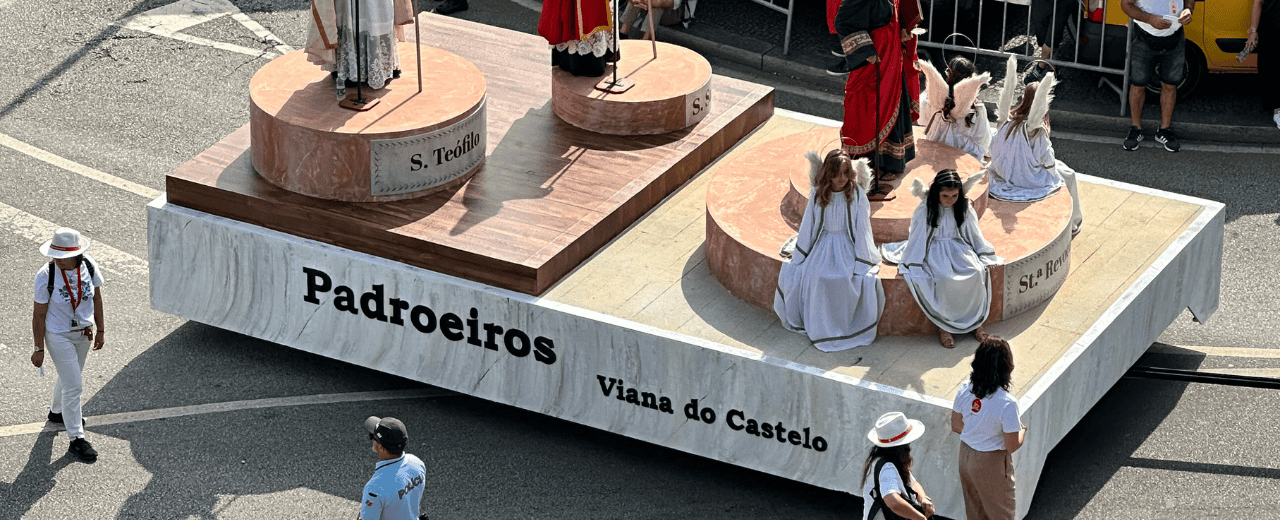
The Historical and Ethnographic Parade is considered one of the highlights of the Romaria d'Agonia, bringing thousands of people together on the streets of Viana do Castelo. More than a parade, it's a true journey through time, showcasing the traditions, crafts, and cultural richness of Alto Minho to the world.
Two distinct moments. The parade is generally divided into two main dimensions:
Historical: Represents significant episodes in the history of Viana and Portugal. Scenes related to the founding of the city, the Discoveries, ancient arts and crafts, as well as Viana's connection to the sea and faith are recreated. The costumes and props are carefully prepared to reflect the era and provide an unforgettable visual spectacle.
Ethnographic: Showcases the costumes, customs, and knowledge of the people of Minas Gerais. Here, farmers, fishermen, embroiderers, artisans, and folk groups parade, all dressed with precision and authenticity. Giants and Big-Headed People enliven the procession, filling the streets with color and joy, while the floats recreate rural, agricultural, and festive atmospheres.
Music and color in every step
The procession is accompanied by popular music groups, folklore groups, and marching bands, filling the streets with rhythm and emotion. The sound of bass drums, concertinas, and cavaquinhos combines with the colorful costumes and the glittering filigree worn by the stewards, creating a unique sensory experience.
More than a tourist attraction, the procession is an act of cultural affirmation and Viana identity. Each parish participates enthusiastically, showcasing its most authentic heritage and preserving traditions passed down from generation to generation.
In short, the Historical and Ethnographic Procession is a celebration of the collective memory and living culture of Viana and Alto Minho. Those who attend take away not only beautiful images but also the vibrant spirit of a people who know how to celebrate their history with pride and emotion.
Lusijoia was present and shows a little bit of Saturday's parade.
Maritime and Land Procession: Faith, Tradition, and the Sea that Embraces Viana
The Maritime and Land Procession is one of the most moving and symbolic moments of the Pilgrimage of Our Lady of Agony, highlighting the deep connection between Viana do Castelo, the sea, and the fishermen's devotion to their patron saint.
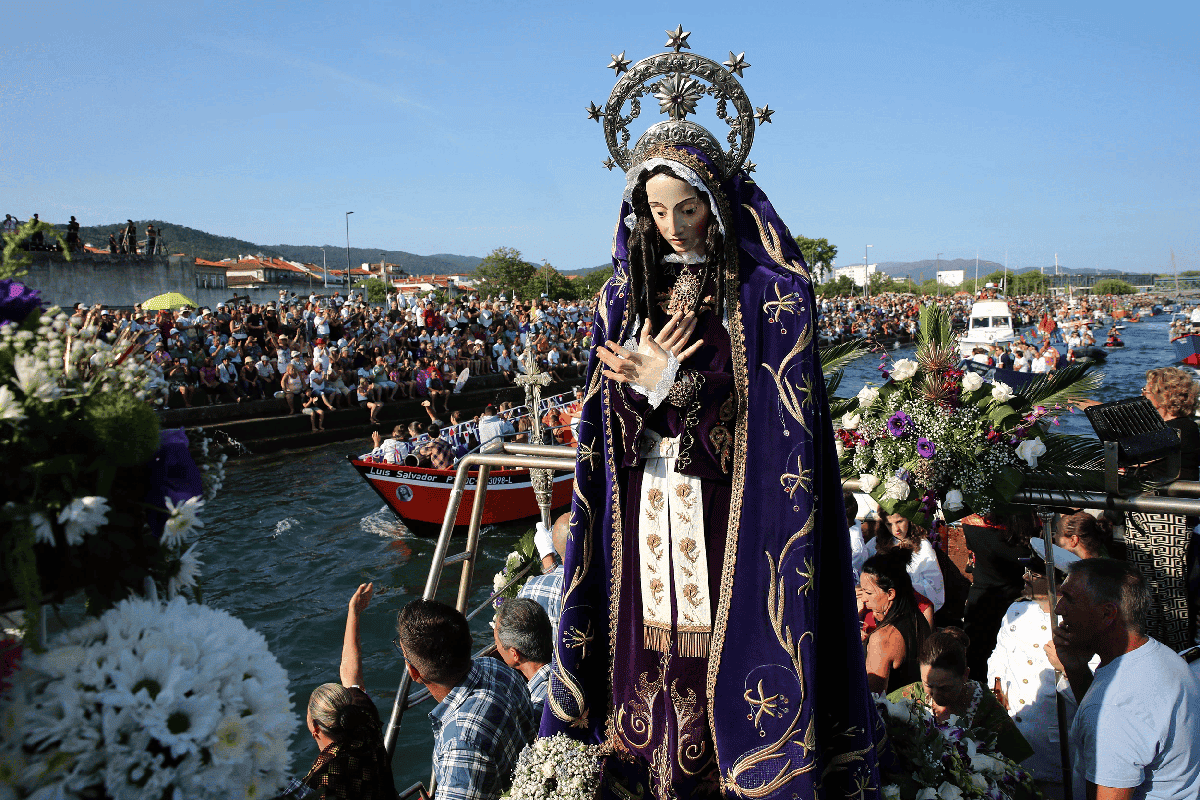
Since the 18th century, Our Lady of Agony has been revered as the protector of seafarers. The procession is, therefore, a gesture of faith and gratitude, in which fishermen ask for protection for their vessels and for all who face the uncertainties of the waters.
One of the most anticipated moments of the festival is when the image of Our Lady of Agony is transported to the Seaport and placed aboard a decorated boat.
From there, a river procession begins, where dozens of boats, decorated with flowers, flags, and colorful nets, accompany the patron saint down the Lima River and to the mouth of the Atlantic. It's a spectacle of rare beauty: the glitter of the gold filigree blends with the blue of the sea and the colorful boats, reflecting the city's maritime soul.
After blessing the waters, the image returns to the sanctuary and travels through the streets of Viana's historic center. This part of the procession is attended by costumed stewards with their gold on their chests, religious brotherhoods, authorities, marching bands, and thousands of faithful who join in prayer and devotion. The streets are decorated with flower carpets, and the entire city transforms into a scene of faith and emotion.
The Maritime and Land Procession is considered one of the most beautiful religious expressions in Portugal, as it unites:
- the faith of fishermen and devotees,
- the popular culture of Minho,
- and Viana's inseparable connection to the sea.
It's a moment that touches both believers and those who simply admire the aesthetic beauty and cultural symbolism that permeates the entire ceremony. In short, the Maritime and Land Procession is a true spectacle of faith, color and tradition, where Viana do Castelo reaffirms its maritime and religious identity, uniting generations in devotion and celebration.
These festivals are much more than just events: they are living experiences of tradition, sharing and culture, deeply rooted in the Viana identity.
-----------------------------------------------------------------------------------------------------
Follow our Blog to discover more publications related to the world of jewelry first-hand!
Subscribe to our Newsletter to receive news from us in your email every two weeks.
Explore our website to appreciate jewelry in Portuguese gold, sustainable gold, silver and filigree pieces, included in the most current trends in the sector.
Follow our Social Media to get more inspiration when composing your everyday looks.
Related posts

Essential Vintage Jewelry: A guide for collectors (and those who want to start)
How to Match Eyeglass Frames with Your Jewelry (The Guide Your Style Was Missing)
The Importance of Choosing the Right Lenses for Sunglasses, Along with Jewelry

The Art of Ear Cuffs: Earrings without piercing to change your look

Total Eclipse in Portugal: How to Photograph the Phenomenon That Will Only Return in 2144

The Euro is getting a makeover: Do you prefer historical figures or birds?

FIA Lisboa 2026: Where traditional craftsmanship meets a contemporary perspective

Emmy Awards 2026: The nominees that will be making headlines
Jewelry with a Story: The allure of vintage and "second-hand" or second-life pieces