


Total Eclipse in Portugal: How to Photograph the Phenomenon That Will Only Return in 2144
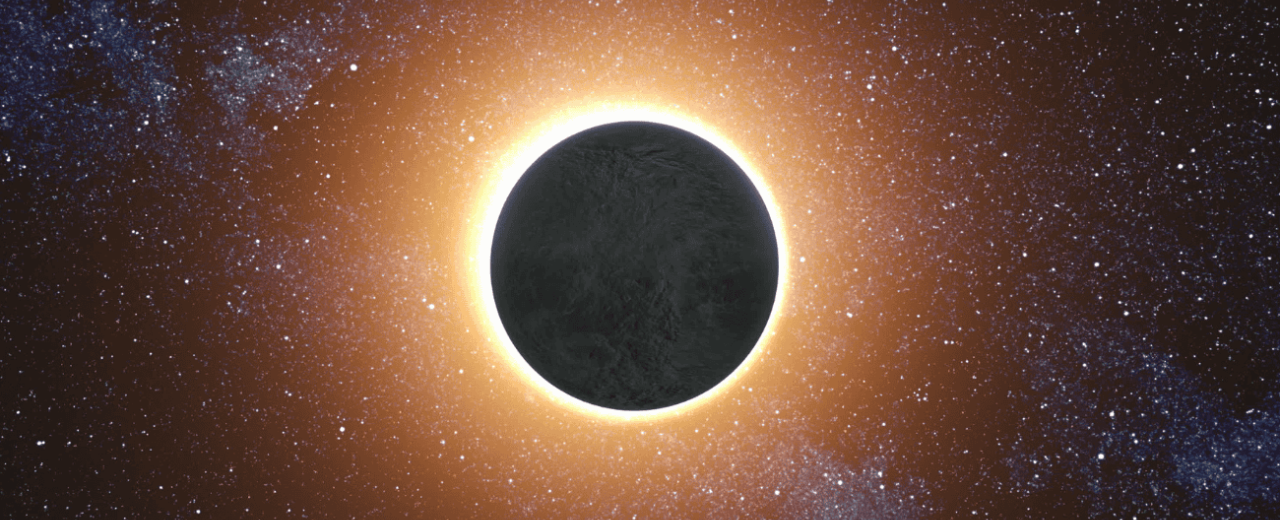
Have you ever imagined being able to show your grandchildren a photograph you took of a total solar eclipse?
On August 12, 2026, Portugal will be the stage for one of the rarest natural phenomena of recent generations. The Sun will be completely eclipsed by the Moon in a small area of northeastern Trás-os-Montes.
And the best part? This is the first time this has happened in mainland Portugal since 1912. The next one will only be in 2144. Yes, you read that right. If you miss this opportunity, your great-grandchildren will be the ones to tell the story.
So, if you're thinking of immortalizing the moment, there are a few things you need to know. And if you want a photograph you'll be proud of, this guide is for you.
What is going to happen (and why it's so special)
On August 12, the Moon will pass exactly between the Earth and the Sun, casting its shadow on the planet. In Portugal, only a very narrow area in the far northeast – near Rio de Onor, Guadramil, and the Montesinho Natural Park, in the Bragança district – will be within the path of totality.
Totality will be very brief: about 14 to 26 seconds, depending on the exact observation point. During that time, day turns into night, the temperature drops a few degrees, and the solar corona becomes visible. This is the only time you can look at the Sun without protection. It is also when the most impressive phenomena appear: the Diamond Ring and Baily's Beads. In the rest of the country, the eclipse will be partial, but very deep: in Porto, about 98% of the Sun will be covered; in Lisbon, about 94–95%.
Timings in Portugal
Here are the timings for the main cities (local time - WEST).
In all locations, the Sun will be very low on the west-northwest horizon, close to sunset. This is the most important detail: if there is a hill, tree, building, or low cloud exactly in that direction, the eclipse may be blocked.
| Location | Type | Start | Maximum | End |
|---|---|---|---|---|
| Rio de Onor / Montesinho | Total | 18:33 | 19:30 | 20:23 |
| Bragança | Almost total | 18:34 | 19:30 | 20:24 |
| Porto | Partial (98%) | 18:34 | 19:32 | 20:25 |
| Coimbra | Partial (97%) | 18:36 | 19:33 | 20:26 |
| Lisbon | Partial (95%) | 18:39 | 19:36 | 20:29 |
| Faro | Partial (93%) | 18:42 | 19:38 | 20:27 |
Source: Star Walk
How to photograph the eclipse safely and get the perfect shot
1. Choose the right location (in advance)
If you want to see totality, you must be within the narrow band that crosses the far northeast of Portugal. But the band is so narrow that just a few kilometres can make the difference between seeing totality or a near-total partial eclipse. Bragança does not guarantee totality – the city centre may be outside the band. The best bet is to aim for Rio de Onor, Guadramil, or an area within the Montesinho Natural Park.
The biggest challenge will be the horizon. The Sun will be only about 10° above the horizon – very low. Choose a location with a clear view to the west-northwest.
2. Essential equipment (besides the camera)
Here is the essential equipment you will need:
| What to bring | Why |
|---|---|
| Certified eclipse glasses | Never look at the Sun without them, except during the seconds of totality. Regular sunglasses DO NOT protect. Certified eclipse glasses will be distributed nationwide. |
| Solar filter for the lens | To protect the camera sensor and get correct exposures during the partial phases. |
| Tripod | Essential for stability, especially with the Sun low on the horizon. |
| Telephoto lens (200mm or more) | The longer the focal length, the larger the Sun in the frame. |
| Remote shutter release | Prevents camera shake when firing. |
3. Camera settings
There is no magic formula, as it depends on the light and your equipment. But here are the basics to start testing before the big day:
- Manual mode (M) – full control over exposure.
- Low ISO (100-400) – to avoid noise.
- Aperture between f/8 and f/11 – for sharper images.
- Shutter speed – will vary greatly. During totality, you may need to increase ISO or open the aperture further to capture the solar corona. During the partial phases, with the solar filter on, exposure times will be very short.
- Manual focus on infinity – autofocus may struggle with the Sun. Focus manually (if possible, with the help of Live View).
4. The moment of totality
With only 14 to 26 seconds, there will be no time for hesitation. During totality, the solar filter is no longer needed. This is the only safe moment to look and photograph without protection. This is when the solar corona appears, the diamond ring shines, and Baily's beads emerge on the edge of the Moon. So practise beforehand.
Know your settings by heart. And, above all, don't forget to look at the sky – not just at the camera screen. It will be a once-in-a-lifetime experience!
What could go wrong (and how to avoid it)
- The horizon blocks the Sun – Don't let a hill or tree ruin the most anticipated 26 seconds of your life. Check the location in advance.
- Out-of-focus – Test manual focus before the eclipse. Autofocus may not work well.
- Under or over-exposure – During totality, the light changes drastically. If you have the chance, watch videos or tutorials from photographers who have already photographed eclipses.
- Forgetting to enjoy the moment – Don't spend all your time behind the camera. Take the photo and then store the moment in your memory.
What does this have to do with Lusijoia?
Perhaps nothing directly. But, just like a total eclipse, a well-made piece of jewelry is also something that lasts forever. The moment you will experience on August 12 is ephemeral, but a piece of jewelry – a piece of Portuguese filigree, for example, or a pair of Rainha earrings, or even a stainless steel bracelet – will be eternal.
And if you go to Bragança to see the eclipse, you already know: totality lasts 26 seconds. The next opportunity is only in 2144. Your grandchildren will thank you for the photograph. And, who knows, also for the jewelry you leave them as an inheritance.
So, have you already chosen your spot to watch the eclipse? Share it with us – and if you want a piece of jewelry to celebrate this historic moment, you already know where to find us.
-----------------------------------------------------------------------------------------------------
Follow our Blog to discover more publications related to the world of jewelry first-hand!
Subscribe to our Newsletter to receive news from us in your email every two weeks.
Explore our website to appreciate jewelry in Portuguese gold, sustainable gold, silver and filigree pieces, included in the most current trends in the sector.
Follow our Social Media to get more inspiration when composing your everyday looks.
Related posts

The Euro is getting a makeover: Do you prefer historical figures or birds?

FIA Lisboa 2026: Where traditional craftsmanship meets a contemporary perspective

Emmy Awards 2026: The nominees that will be making headlines
Jewelry with a Story: The allure of vintage and "second-hand" or second-life pieces
Wedding anniversaries: the symbolism behind each year (and the perfect piece of jewelry to...

Lusijoia rebranding and the art of storytelling (with a new look)

Diamonds: No, thank you! What the industry doesn't want you to know (and we'll tell you)

Summer Solstice: The best jewelry to take to the beach (without fear of ruining it)

The Fascination of Queen Earrings: From Queen Maria II to Margarida Maldonado Freitas