

How to Choose Wedding Rings: Yellow, White, or Rose Gold, Width, and Comfort
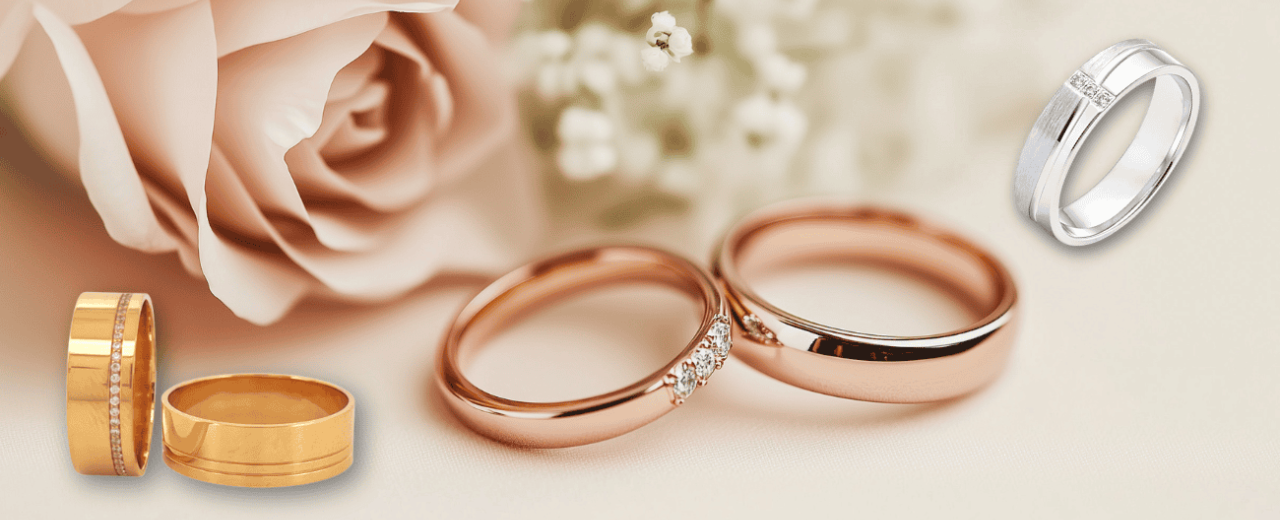
Choosing wedding rings is, for many couples, one of the most emotional decisions in the entire wedding preparation process. It is not a piece of jewellery like any other: it will be on your finger every day, it will accompany hands that work, cook, write, hug and, with luck, it will last a lifetime. That is precisely why it is worth choosing calmly and with information.
The good news is that you don't need to be a jewellery expert to get it right. You just need to understand a few essential points: the colour of the gold, the fineness (the karats), the width and profile of the ring, the right size, the harmony with the engagement ring, and the personalisation details. In this guide we go through each of them, simply and practically, so that you arrive at the store already knowing what you are looking for.
1. Yellow, White or Rose Gold: which to choose?
The first choice, and often the most visual one, is the colour of the metal. The three most sought-after colours are yellow gold, white gold, and rose gold. They are all gold, but the alloy they are made with gives them different tones, behaviours, and styles.
Yellow gold: the classic that never fails
It is the most traditional colour and the one we most associate with the idea of a wedding ring. Yellow gold has a warm, timeless shine, and it pairs very well with most skin tones, especially with warm-toned skin. It is also a safe choice for those who like pieces that never go out of fashion: a yellow gold wedding ring looks as elegant today as it did fifty years ago.
Another practical advantage is that yellow gold usually disguises the small scratches of everyday life well. Over time, the ring gains a slight patina of use, which many couples even appreciate, because it tells the story of the marriage. If you want it to look like new again, a simple polish by a professional will do the trick.
White gold: modern, discreet, and elegant
White gold has a silvery, luminous appearance, more contemporary and minimalist. It is widely used in engagement rings with diamonds or light-coloured stones, because the cool tone enhances the brilliance of the gems. It tends to look particularly good on cool-toned skin, but, in practice, it ends up being a matter of personal taste.
There is one detail worth knowing: many white gold pieces receive a rhodium plating that enhances the shine and the white colour. With use, this plating can wear off and reveal a slightly warmer tone underneath. It is not a defect; it is normal and perfectly reversible, since the plating can be renewed at a jeweller's. If you have sensitive skin or allergies to certain metals, always ask about the composition of the alloy before deciding.
Rose gold: romantic and full of personality
Rose gold owes its soft, coppery tone to the presence of copper in the alloy. It is a romantic colour that has gained many fans in recent years, especially among couples looking for something a little different from the traditional without losing elegance. It looks beautiful on almost all skin tones and has a very pleasant appearance in rings with simple lines.
Since copper is a resistant metal, rose gold pieces tend to be quite robust. It is a good option for those who want a ring with character that, at the same time, withstands daily wear well.
What if each of you wants a different colour?
That can happen too: one member of the couple loves yellow gold and the other prefers white gold. It is not a problem. Nowadays, mixing metals is an accepted trend, and there are even two-colour rings that combine two colours in the same piece. If you want to better understand how to combine tones without getting it wrong, you can read our article on how to mix metals, a trend that is here to stay.
2. Karats and Hallmarking: what they mean and why they matter
After colour comes the fineness of the gold, that is, the amount of pure gold present in the alloy. This is where karats come in, and it is one of the points that raises the most questions.
Pure gold corresponds to 24 karats, but it is too soft for a piece worn every day. That is why jewellery mixes it with other metals, which makes it more resistant. The most common finenesses in jewellery are:
- 19.2 karats (800 thousandths): this is traditional Portuguese gold, with a rich tone and a good amount of gold in the alloy;
- 18 karats (750 thousandths): widely used in international jewellery, with an excellent balance between purity and resistance;
- 14 karats (585 thousandths): more resistant to scratches and, as a rule, more affordable;
- 9 karats (375 thousandths): the most economical option, with a lower percentage of gold.
Which is best? There is no single answer. The higher the fineness, the greater the percentage of gold and, as a rule, the more intense the tone and the higher the price. The lower it is, the more resistant the piece tends to be to wear. For a ring that will be worn every day for decades, the ideal is to find the balance between budget, durability, and the feeling of having a truly valuable piece of jewellery.
The importance of the hallmark
In Portugal, pieces in precious metals must bear hallmarks, which certify the fineness of the metal. These small punches, almost invisible to the naked eye, are the official guarantee that the gold is what it claims to be. When buying your rings, always confirm that the piece is properly marked and ask for an invoice with the item description. It is a matter of safety and peace of mind, and it also helps preserve the value of the jewellery over the years. You can learn more about this topic in our blog section dedicated to hallmarking.
3. Width and Profile: the secret of comfort
Many people choose a ring based on how it looks in a display case and only later discover that, on the finger, the feeling is completely different. Width and profile are the two factors that weigh most on daily comfort, so they deserve attention.
What width to choose?
The most common wedding rings are usually between 2 and 6 millimetres wide, although there are thinner and wider models. As a general rule:
- Thin rings (2 to 3 mm): delicate and discreet, ideal for smaller hands or for those who prefer a light, minimalist look. They work very well if they are to be worn alongside the engagement ring;
- Medium rings (4 mm): the most popular balance point, with presence without weighing you down;
- Wide rings (5 mm or more): more striking and masculine in the traditional image, but increasingly chosen by everyone. They require some getting used to.
A useful tip: try different widths in the store and leave them on your finger for a few minutes. The initial feeling can be misleading, and it is only after some time that you realise whether the ring bothers you or goes almost unnoticed.
Flat, domed, or comfort-fit interior
The profile is the shape of the ring's cross-section, that is, how you see it from the side. The most common are:
- Flat: straight, modern lines, with a more contemporary look;
- Domed (or rounded): the classic shape, with a slightly curved surface, soft to the touch, and very elegant;
- Comfort-fit interior: the inside of the ring is slightly rounded, which makes it easier to put on and take off and makes daily wear more pleasant, especially in wider rings.
You can also choose the finish: polished (shiny), matte or satin, or even with textures and details. A polished finish shows small scratches more, while a matte one tends to disguise them, but any finish can be renewed.
4. How to get the size right
There is nothing more frustrating than a ring that spins on your finger or is hard to get over the knuckle. Getting the size right is essential, and there are some precautions that help a lot.
First, know that finger size is not always the same. It varies throughout the day and with conditions: in heat, after exercise, at the end of the day, or after a saltier meal, fingers tend to swell a little; in cold, they become thinner. So the best time to measure is late afternoon, at normal body temperature, and never right after being in the cold or exerting yourself.
Second, the width of the ring influences the ideal size. A wider ring usually requires a little more room than a thin one, because it covers a larger area of the finger. Many jewellers therefore advise considering a slightly larger size when choosing a wide model. Always ask the professional serving you for a recommendation.
If you are not sure, the most reliable way is to measure your finger in the store with a professional ring gauge. At home, you can measure the circumference of your finger with a measuring tape or a piece of string and compare it with the size chart, but always consider that value as a guide. The ideal is for the ring to pass over the knuckle with a small effort and sit snugly, without squeezing or spinning freely.
And if the size is wrong? In many gold rings it is possible to make small size adjustments, but this depends on the model, the width, and any engravings or stones. So it is always better to get it right from the start and confirm the exchange or adjustment conditions at the time of purchase.
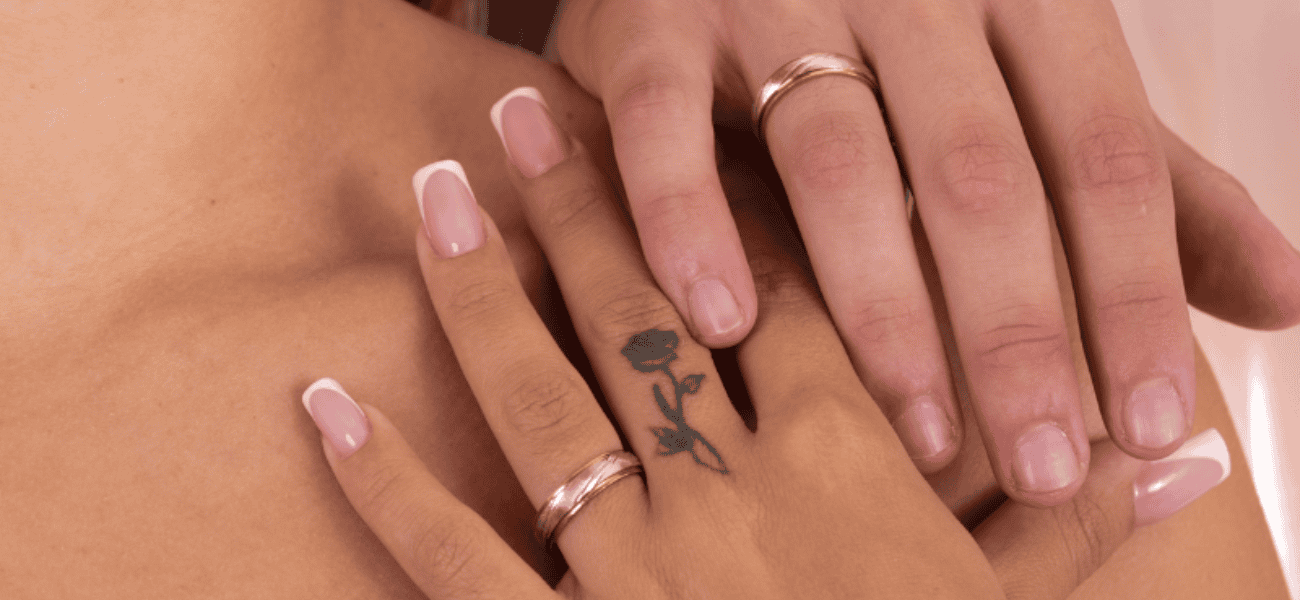
5. Wedding Rings and Engagement Ring: match or contrast?
If you are going to wear an engagement ring, it is worth thinking about how the two pieces will live together on the same finger. There are two possible approaches, and neither is wrong.
Total harmony
Choosing wedding rings in the same gold colour and with a style similar to the engagement ring creates a coherent and balanced set. If the engagement ring is thin and delicate, an equally thin wedding ring will look very good next to it. If the ring has a more elaborate design, a simple, smooth wedding ring can serve as an elegant counterpoint.
Contrast with intention
It is also possible to opt for different colours or widths, as long as the result looks intentional. For example, a white gold engagement ring with a yellow gold wedding ring can look surprising and full of personality. The important thing is to try the two pieces together, on the same finger, before deciding.
A practical point: if the engagement ring has a stone with some height, make sure the wedding ring sits well next to it and does not end up misaligned. Some engagement rings were designed with a specific wedding ring in mind, and others work well with any. Discover more options in our selection of engagement rings and our wedding rings.
6. Engraving and Personalisation: the touch that makes the ring unique
One of the most beautiful ways to make a wedding ring truly yours is the inner engraving. It is an old tradition and, today, there are many ways to personalise it:
- the wedding date or the date the relationship began;
- the names or initials of the couple;
- a word, a short phrase, or a coordinate with special meaning;
- a fingerprint or a signature, when the technique allows it.
One piece of advice: the shorter the text, the more legible and elegant the engraving will be, especially on thinner rings, where space is limited. If you are thinking of something more special, such as your own design or a unique model, discover our personalizable jewellery and talk to our team about the available possibilities and respective deadlines.
7. Deadlines: when should I choose the rings?
Wedding rings are often one of the last things couples think about, and that can create unnecessary stress. For models already available, the purchase can be quick, but if you want a special size, an engraving, or a made-to-order piece, you need to allow for some production time.
As a guide, the ideal is to start looking at rings three to four months before the wedding date. This gives you room to compare models calmly, try them on, decide together and, if necessary, make size or engraving adjustments without rushing. Leaving everything to the last few weeks increases the risk of having to accept a choice that was not ideal just because time is running out.
8. A special idea: using family gold
For many couples, there is a particularly emotional way to have rings with history: reusing the gold from old pieces, such as a family piece of jewellery that is no longer worn. That gold can be transformed into new rings, keeping alive the memory of whoever wore it before, or be appraised and used as part of the payment for new pieces.
If you have used gold at home and want to know how much it is worth, LUSIJÓIA has an appraisal service with a certified appraiser. You can learn more about buying used gold and how the process works.
9. How to care for your rings over the years
A good gold wedding ring is made to last, but, like any piece of jewellery worn every day, it benefits from some simple care:
- Regular cleaning: wash the ring with warm water and a little neutral soap, using a soft brush, and dry it with a soft cloth;
- Avoid harsh chemicals: chlorine, bleach, and some cleaning products can damage the alloys. Remove the ring for heavy cleaning and for the pool;
- Mind the gym and manual work: heavy objects and abrasive surfaces can scratch or deform the ring;
- Store it separately: when you are not wearing it, store it in a case or soft cloth, away from other jewellery that could scratch it;
- Periodic check-up: take it in to be checked from time to time. A polish or, in the case of white gold, the renewal of the rhodium plating restores its original appearance.
10. The most common mistakes (and how to avoid them)
To finish, we have gathered the most frequent mistakes when choosing wedding rings, so that you can avoid them:
- Choosing only by price: a wedding ring will be worn for many years. Make up the difference in durability, quality, and comfort.
- Forgetting about daily life: if you work with your hands or play sports, value resistance and comfort over very delicate designs.
- Measuring your finger at the wrong time: avoid measuring in the cold, in extreme heat, or right after exercise.
- Not checking the hallmarking: always confirm the legal marks and ask for a detailed invoice.
- Leaving everything to the last minute: start early, especially if you want engraving or personalisation.
- Not trying the pieces together: if you are going to wear an engagement ring, try it next to the wedding ring before deciding.
Frequently asked questions
Yellow, white or rose gold: which is more resistant?
Resistance depends more on the fineness of the gold and the alloy than on the colour itself. In general, alloys with a lower percentage of gold tend to be more resistant to wear. Rose gold, because it contains copper, is known for being quite robust, but any of the colours is suitable for daily use.
What is the best fineness for a wedding ring?
There is no single best one. 19.2-karat gold is the traditional Portuguese choice, 18-karat is very popular, and 14-karat is a more resistant and affordable option. Choose the balance between budget, tone, and durability that makes the most sense for you.
Do the two rings have to be identical?
No. Many couples choose identical models for the symbolism, but it is equally common to opt for different widths, finishes, or even colours, according to each person's taste and comfort.
Can I engrave any text on the ring?
In general, yes, as long as the text fits in the available space. The thinner the ring, the shorter the text should be. Always check with the store about the options and engraving deadlines.
How do I know if the gold is real?
Check whether the piece has hallmarks and ask for an invoice with the item description. If you have doubts about pieces you already own, you can request an appraisal from a certified professional.
In summary
Wedding rings are a personal choice, and the best model is the one you feel is truly yours. Think about the gold colour you like most, choose a fineness that balances beauty and durability, try widths and profiles until you find the ideal comfort, get the size right carefully, and give yourself time to decide without rushing. Then add the touch that makes them unique: a date, a word, a story.
If you would like help choosing, visit our wedding ring collection, discover the engagement ring options, or talk to us. We will be delighted to accompany you at this very special moment.
Related products


Related posts

Mixing Metals: The Trend That’s Here to Stay for Fall/Winter 2026

Portuguese Justice Auctions 33 Lots of Gold Valued at Half a Million Euros
Theft with a Happy Ending: GNR recovers gold jewelry worth €80,000

A Gold Bar Hidden in Lapland: Treasure Hunt

MUDE. All the beauty of the world in 502 contemporary jewels.

Portojóia 2026: "Luxury Redefined" and the future of Portuguese jewelry

New post

Margarida Corceiro's Shine at the 2026 Venice International Film Festival
Essential Vintage Jewelry: A guide for collectors (and those who want to start)